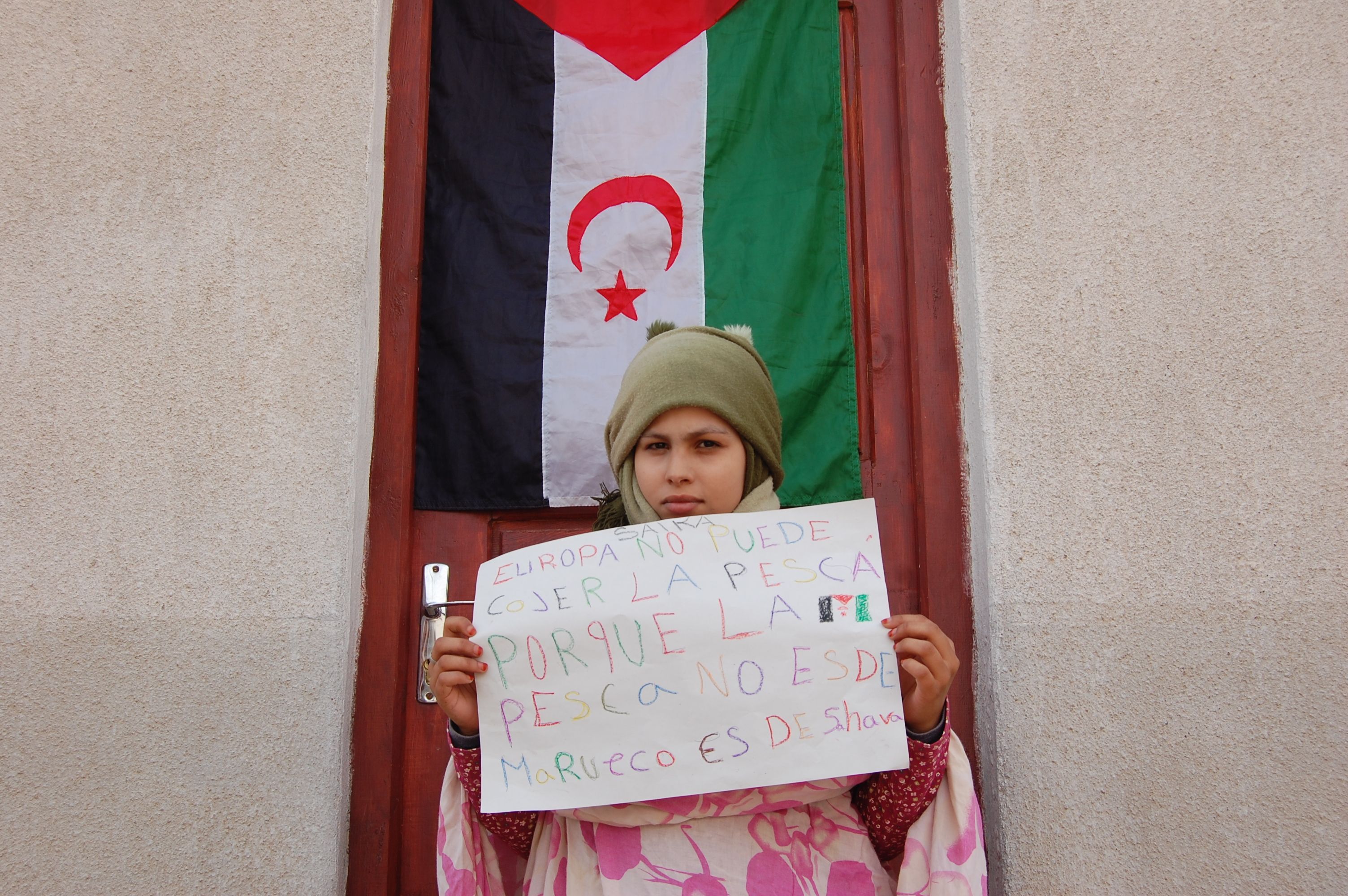
A joint statement that came out of last week’s EU-Morocco Association Council asks readers to believe in a fiction: that an undefined autonomy plan imposed by an occupying power can satisfy the right to self-determination, and that respect for international law can coexist with the systematic ignoring of the EU’s own highest court.
This piece is a commentary by Western Sahara Resource Watch.
On 29 January 2026, following the fifteenth EU-Morocco Association Council in Brussels, a joint communiqué was presented as a celebration of partnership, shared values, and respect for international law. Yet when read closely, particularly in its treatment of Western Sahara, the statement exposes deep contradictions, legal omissions, and political hypocrisy that cannot be reconciled with the principles the European Union claims to uphold.
An autonomy plan without substance - or consent
Once again, the Moroccan autonomy plan for Western Sahara is invoked as the supposed basis for a “just, lasting and mutually acceptable” solution. This plan has now been on the table for nearly two decades. Yet despite repeated diplomatic endorsements, it remains conspicuously devoid of concrete detail. No institutional design has been publicly agreed, no guarantees articulated, no implementation roadmap clarified, and no mechanism established to ensure that the will of the Saharawi people is genuinely and freely expressed.
This persistent vagueness raises an unavoidable question: how serious is Morocco about a proposal it has promoted for twenty years without ever subjecting it to scrutiny, negotiation, or democratic validation? An autonomy proposal that exists primarily as a diplomatic talking point - rather than a clearly defined political framework - cannot credibly be described as a pathway to self-determination.
Crucially, autonomy introduced by an occupying regime cannot be equated to an expression of self-determination. International law is clear that self-determination is a right held by peoples, not a policy option conferred from above by an occupier. A top-down autonomy scheme, designed and controlled by the occupying state, is fundamentally incompatible with the notion of self-determination as understood under the UN Charter and international human rights law. Yet the joint statement treats Morocco’s proposal not as one possible outcome of a self-determination process, but as the process itself.
A process never tested against genuine self-determination
The Moroccan autonomy plan has never been tested through a free and fair act of self-determination involving the Saharawi people. There has been no referendum, and as such no opportunity for Saharawis to choose freely between independence, integration, or autonomy.
Instead, the statement endorses negotiations “without preconditions” but already anchored to Morocco’s autonomy plan. This effectively predetermines the outcome and strips the process of its self-determining character. A negotiation framework in which one party’s preferred solution is treated as the sole basis for discussion is not a neutral political process - it is an exercise in normalisation of an unlawful status quo.
The silence on the Court of Justice of the European Union
Perhaps the most striking omission in the joint communiqué is its complete failure to reference the jurisprudence of the Court of Justice of the European Union (CJEU). Over the past decade, the CJEU has issued a series of landmark rulings affirming that Western Sahara is a territory that is “separate and distinct” from Morocco, and that the Saharawi people possess the right to self-determination.
The Court has further ruled that EU-Morocco agreements cannot be applied to Western Sahara without the consent of the Saharawi people. These judgments are not marginal legal opinions: they are binding interpretations of EU law. By ignoring them entirely, the joint statement signals a troubling willingness by EU institutions to sidestep their own legal order when political convenience demands it.
This selective respect for the rule of law undermines the EU’s credibility not only in Western Sahara, but globally. A Union that prides itself on being a “community of law” cannot legitimately champion international legality while quietly disregarding its own courts.
This omission is all the more striking given that the legal contestation surrounding the EU’s engagement with Morocco and Western Sahara is far from theoretical - it is ongoing. On 27 December 2025, the Polisario Front brought action before the General Court of the European Union targeting the provisional application of the EU-Morocco trade agreement adopted in October 2025. The challenge stresses that including Western Saharan products under preferential treatment and labelling them in ways that evade judicially required territorial recognition violates binding CJEU rulings that have consistently affirmed that the Western Sahara is “separate and distinct” - precisely the jurisprudence that the joint statement conspicuously fails to acknowledge.
Ukraine and Western Sahara: a double standard laid bare
The joint communiqué forcefully reaffirms support for “Ukraine’s independence, sovereignty, and territorial integrity within its internationally recognised borders.” This language is unequivocal - and rightly so. Yet when juxtaposed with the EU’s position on Western Sahara, it exposes a stark and uncomfortable double standard.
Western Sahara, like Ukraine, is recognised under international law as a distinct territory. Its people, like Ukrainians, possess the right to determine their political future free from external coercion. The UN has never recognised Moroccan sovereignty over Western Sahara, just as it has never recognized Russia’s attempted annexations in Ukraine.
To defend territorial integrity and international borders in Europe while endorsing an autonomy plan imposed by an occupying power in Africa is not principled diplomacy - it is geopolitical selectivity. Such inconsistency erodes the universality of international law and sends a damaging message: that some peoples’ rights are negotiable, depending on strategic interests.
Already in 2015, the European Parliament policy department issued a report calling for coherence in the EU’s approach to the occupations of Western Sahara and Crimea.
Partnership at the expense of principles
The EU-Morocco partnership is described in the statement as being grounded in shared values, respect for international law, and a rules-based international order. Yet on Western Sahara, those values are conspicuously absent. Instead of reaffirming the Saharawi people’s right to self-determination, the statement recasts the issue as a technical dispute to be resolved through an autonomy formula devised by the occupying power.
By doing so, the EU risks transforming itself from a neutral actor committed to decolonisation into an accomplice in its indefinite postponement. A partnership that requires the sacrifice of legal consistency and human rights is not a partnership of values - it is a partnership of convenience.
Law cannot be selective
The joint EU-Morocco statement asks to be read as a reaffirmation of international law and multilateralism. On Western Sahara, it achieves the opposite.
By promoting an undefined autonomy plan, ignoring binding CJEU rulings, and applying double standards when compared to Ukraine, the statement undermines the very legal order it claims to defend.
If the EU is serious about a rules-based international system, it must apply those rules universally. Self-determination cannot be conditional, deferred indefinitely, or replaced by autonomy imposed from above. Until the Saharawi people are allowed to freely and genuinely decide their future, no amount of diplomatic language can transform occupation into legitimacy.
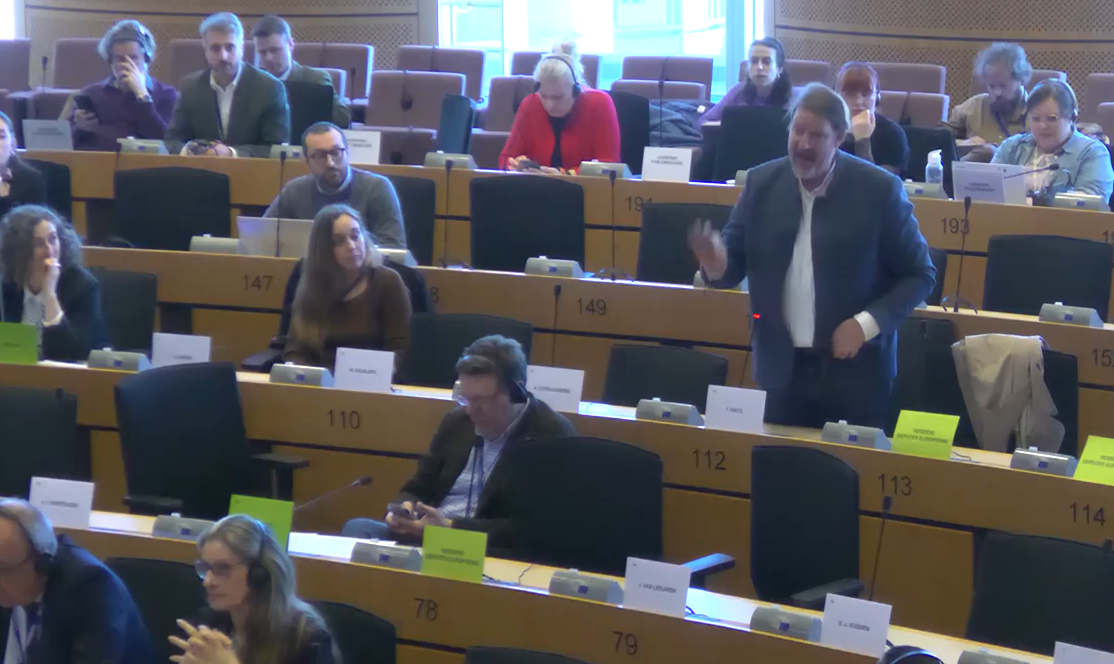
MEPs push back on Commission over Western Sahara in EU–Morocco trade
MEPs from across the political spectrum sharply criticised the European Commission over its handling of EU-Morocco trade relations covering occupied Western Sahara, raising concerns over legality, transparency and an apparent disregard for Parliament’s role.
SRI update
The following overview enlists stock-exchange registered companies with current or recent operations in occupied Western Sahara. Updated 15 March 2026
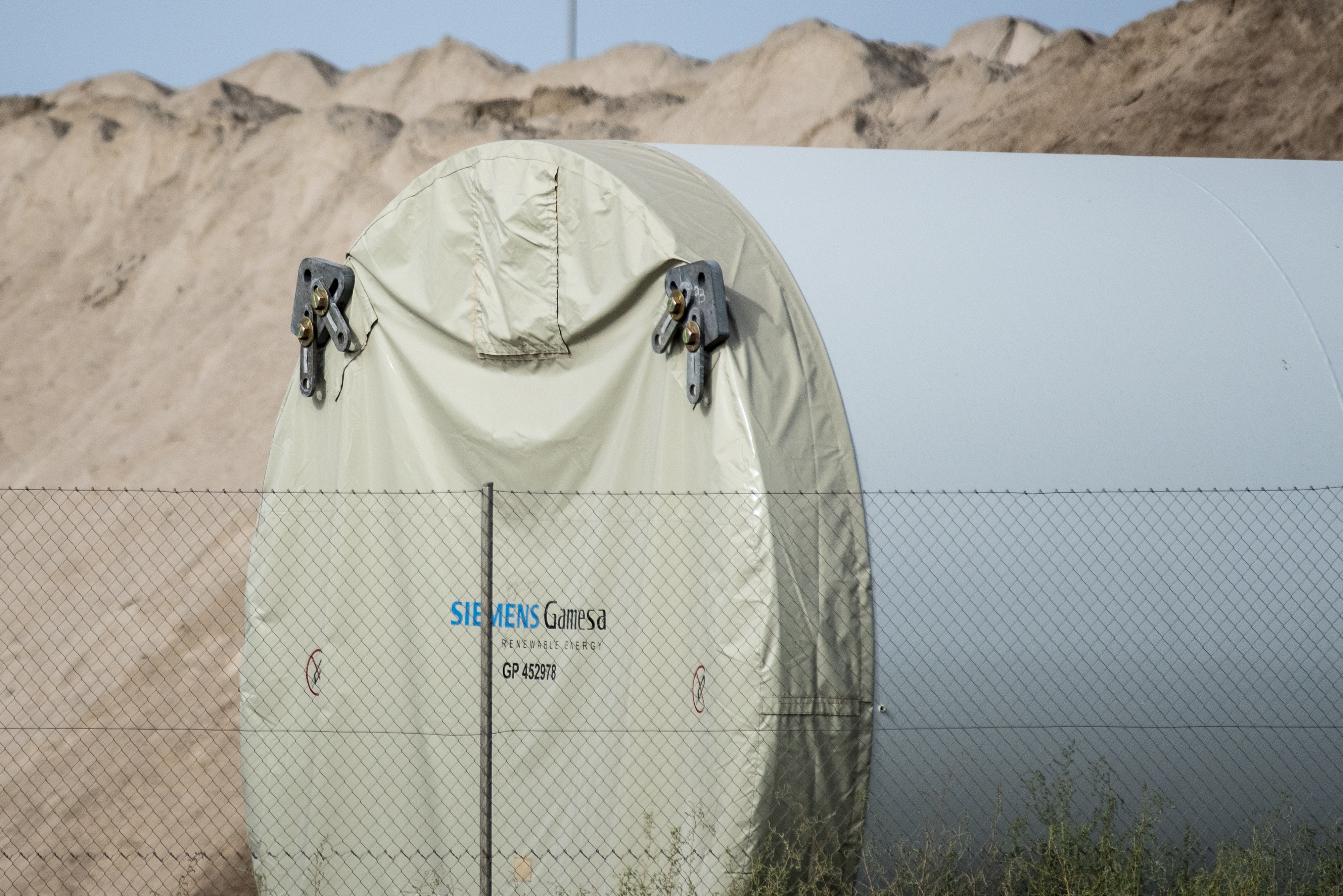
Siemens Energy sidesteps key questions on Western Sahara
At its 2026 Annual General Meeting, Siemens Energy defended its involvement in wind energy projects in occupied Western Sahara.
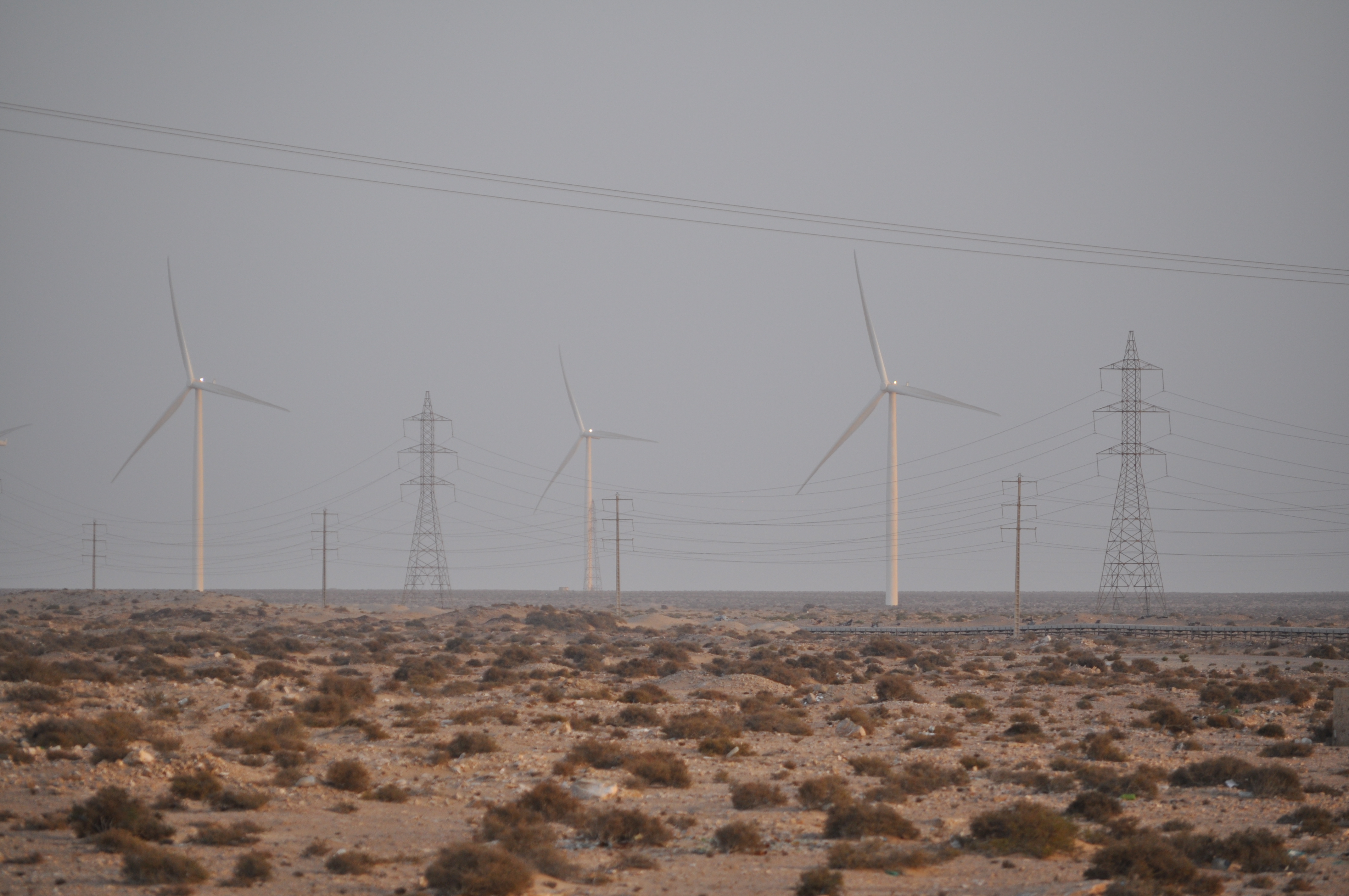
Morocco allocates land in occupied Western Sahara to green hydrogen investors
Morocco’s ambitions to become a global green hydrogen powerhouse are accelerating. Yet, Rabat is allocating land in a territory it does not legally own.